.BXh3JPaN_1HUIRx.webp)
TL;DR
Arrive at your session with your hair already styled the way you normally wear it. You know your hair better than anyone else. The photographer can primp and position your hair, but styling is not something the photographer can do for you. If you have long hair, simple styles work best. Wearing your hair down or in a ponytail allows the length to show in your images. Avoid changing your hairstyle right before your session. If you haven’t had time to grow into a new look, that discomfort will show in your photos. If you are a man, shave the night before to avoid razor burn and groom your facial hair with intention. If you are bald or balding, take comfort in knowing that managing shine is the photographer’s responsibility, not yours.
Your Hair Matters More Than You Think
Hair can make or break a headshot session, not because there’s one right way to wear it, but because how you feel about your hair directly affects how you photograph. Research from sociologists Jaclyn Wong and Andrew Penner found that well-groomed individuals earn roughly 20 percent more than those with average grooming, even after accounting for natural physical attractiveness. When you’re comfortable with your appearance, that confidence shows in your expression. When you’re self-conscious about a bad hair day or a recent cut you regret, that discomfort shows too.
The same principle applies to what you wear and the colors you choose. Your hair and your wardrobe work together to create the overall impression, and feeling good about both helps you photograph with confidence.
After photographing headshots for nearly two decades, I’ve seen the full spectrum: gorgeous hair that photographs beautifully, last-minute disasters that require emergency intervention, and everything in between. The good news is that most hair-related issues are preventable with the right preparation. This article covers what you can control, what to leave to the photographer, and how to walk into your session feeling confident about your hair and grooming choices.
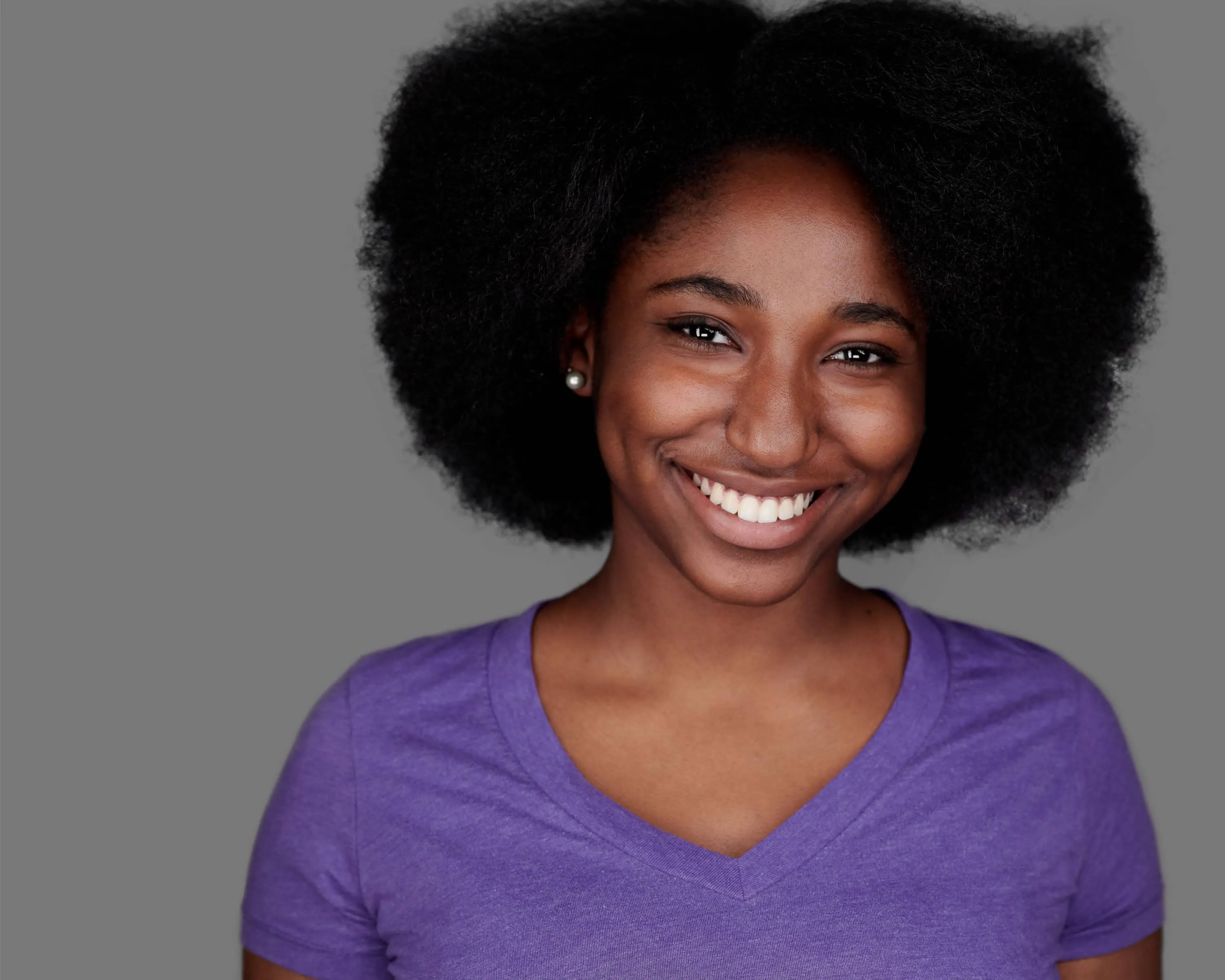
What Should I Do With My Hair for a Headshot?
Come to your session with your hair ready. Style it the way you typically do. You know your hair better than anyone, and no one can replicate your style quite like you can.
No one knows your hair like you do. You’ve been styling it your entire life, and you know what works for you. What I do during the session is primp and position your hair as needed. Sometimes it’s to ensure light reaches your face appropriately. Sometimes it’s to fill in hair gaps where the background shows through, or to manage hair sprawl across your shoulders. Sometimes it’s a question of symmetry, or simply because something looks better a different way, but these are adjustments, not styling.
If you color your hair and you know visible roots will bother you, touch them up before your session. The camera sees everything, and if this is something you’re sensitive to, handling it ahead of time means one less thing to think about during your session.
The same goes for gray hair. If you’re conscious about a few strands of tinsel, take a look before your session. If you leave a few extra strands behind, my retoucher and I can handle them in post-processing.
If you wear a wig, inspect it before your session the same way you would inspect your clothing. Check for visible mesh, makeup residue in the hairline, or missing hairs at the part. These details draw attention and require extra work in post-processing to blend naturally. Make sure it looks the way you intend to be seen.
Avoid hair products that leave visible residue. I’ve seen gels, mousse, sprays, and pomade do nice things. But some products leave flakes or residue that the camera sensor picks up immediately. Wear your hair as you typically do, and stick with products you know work well for you.
What Is the Best Hair Style for Professional Headshots?
For long hair, I typically recommend one of two styles: down or in a simple ponytail. The reasoning is straightforward: if you have long hair, the image should show that length. Updos and buns don’t give viewers that same information. Plus, the back of your head won’t be seen in a headshot, so any styling effort there is lost. The goal is to give viewers enough information about who you are and what you look like so they can draw a connection with you.
I always accommodate client wishes, so if you have a signature hair style that defines your professional brand, wear it. The goal is for you to look and feel like yourself.
What matters most is that you don’t change your hairstyle right before your session. Changing styles days before any photo session is never a great idea because it takes time to acclimate to a new look. You won’t feel like yourself, and you may even have trouble recognizing yourself.
I once worked with a client who had long hair and decided to cut it short just days before her session. During the session, she loved the photos and made her selections confidently. After the retouched images were delivered, I received an earful about how much she hated her hair. In some ways, I felt responsible, but I can’t control when or how someone decides to change their hairstyle. The discomfort she felt looking at those images wasn’t about the photography, but about not having lived in her new style long enough to feel like herself.
What Is the 2.25-Inch Hair Rule?
The 2.25-inch rule is a guideline created by hairstylist John Frieda for determining whether short or long hair suits your face shape. Hold a pencil horizontally under your chin and place a ruler vertically under your ear so they form an L-shape. If the distance where they meet is less than 2.25 inches, short hair typically suits you. If it’s more than 2.25 inches, longer hair tends to be more flattering.
This might be a useful consideration when you’re deciding whether to make a significant change to your hairstyle, or when discussing options with your hair stylist. But from a photographer’s perspective, what matters more is whether you’ve grown into whatever style you have.
I can always tell when a client hasn’t yet grown into her haircut, or when someone is uncomfortable with a recent change. That discomfort shows in the photos, particularly in facial expressions, regardless of whether the cut technically suits their face shape according to some measurement. The 2.25-inch rule might help you decide if a haircut is right for you, but it won’t help you look confident in photos if you’re still adjusting to the change.
Facial Hair and Beards
Beards are interesting and offer you a great way to showcase your personality. Whether you prefer a short cropped beard, longer shaped facial hair, or a moustache or goatee, all of these styles can photograph well when they’re groomed deliberately.
Taking pride in your appearance means caring for your facial hair. I once made the horrific error of having my driver’s license photo updated without trimming my beard beforehand. I looked like I had just spent a few years as a prisoner of war. I regret that photo, and I regret not taking better care ahead of time. Don’t make that mistake for your professional headshots.
You might have trouble growing hair in certain spots. Patchiness isn’t an issue I see often, but when it does appear, there are two solutions. I can rotate your face so the patchiness isn’t noticeable, or I can use Photoshop to fill in those areas judiciously, so either way, it’s manageable.
.BXYnj29F_Z28IeYP.webp)
Shaving Before Your Headshot Session
If you’re clean-shaven, shave the night before your session, not the morning of. Razor burn typically appears within minutes of shaving and can last a few hours to a few days. Shaving the night before gives your skin time to recover, so any irritation subsides before you’re in front of the camera. Sure, you might end up with a little 5 o’clock shadow, but the alternative is a beet red, irritated face that the camera captures in perfect detail.
The camera sees everything, and a slight shadow is far less distracting than visible irritation.
Guidance for Bald and Balding Men
If you lack follicular horsepower, you will likely have a shiny head because when light touches skin, it reflects, and natural oils on the skin make it even more reflective.
The good news is that this is not your responsibility to fix. There isn’t much you can do about shine on your own. Instead, it’s incumbent on me, the headshot photographer, to deal with these nuances.
I have tools in my arsenal for combating shine, and blotting papers work well for quick fixes. I also use Rimmel London Stay Matte Primer, which mattifies without feeling greasy or oily. Peter Thomas Roth Anti-Shine Mattifying Gel is another option that works wonders. A tiny bit of either product, combined with my skills and abilities to light facial features appropriately, ensures that light goes only where I want it to go.
The goal is to ensure that a shiny head does not compete with your facial expression for attention. That’s the photographer’s job to manage, not yours.
.BuoZP4jo_ZftjKK.webp)
What Happens When Hair Preparation Goes Wrong
The preparation guidance I provide to clients exists for a reason. I understand that it’s a lot to go through, but it’s there to ensure that my clients are well prepared and have a great session. Following the guidance leads to success, and not following it means we have to find alternative solutions to whatever issues arise.
Some clients bring their own hair tools to the studio and do their hair on site, arriving with curling irons, flat irons, blow dryers, and brushes. I once had a client mess up her own hair so badly that my makeup artist had to beg a colleague who had a shop on the same block to come up and straighten things out. That’s an extreme example, but it illustrates why I ask clients to come hair ready.
There’s a reason I can’t style your hair for you: no one else can style your hair the way you do because hair is uniquely personal. It’s something we feel better about doing on our own, even though having someone else do it makes us feel pampered.
Come prepared and follow the guidance, and if something does go wrong, know that we’ll find a way to make it work.
Make Your Hair Work for You
Your hair is personal, and how you wear it, how you style it, and how you feel about it all affect how you photograph. The best thing you can do is come to your session prepared, with your hair styled the way you normally wear it, groomed deliberately, and feeling like yourself on your best day.
Don’t make dramatic changes right before your session, touch up roots if you color, and avoid products that leave residue. If you’re a man, shave the night before to avoid irritation and groom your facial hair with intention.
If you’re bald or balding, you can relax because that’s not your problem to solve, and your photographer has tools and techniques to ensure shine doesn’t steal attention from your expression.
Follow the preparation guidance, trust the process, and walk into your session confident because that confidence is what makes the best headshots.
Frequently Asked Questions
How you style your natural or curly hair depends on the purpose of your images. For corporate headshots, business headshots, LinkedIn, or social media, wear your hair the way you do on a day-to-day basis because visibility leads to recognition, recognition leads to familiarity, and familiarity builds connection. For creative or artistic work like acting or modeling, either approach is perfectly acceptable, and there's nothing wrong with showing off a little personality.
My makeup artist is available to work with clients who want professional makeup for their session. However, I don't offer hair styling services because hair is uniquely personal, and no one can style your hair quite like you can. During the session, we will primp and reposition your hair and fix strays and problem areas as we work together, but I don't have a hairstylist on staff. If you want a blow out or other hair services before your session, there are local salons that can help.
Please check your nose and ear hair ahead of time. If you are able to take care of this yourself, I suggest doing so the night before your session. If you are unable to, my retoucher and I are incredibly skilled, and we will assist you with digital hair removal in post-production.
The same philosophy that applies to hair applies to beards: for corporate headshots, LinkedIn, and professional settings, keep your beard styled the way you normally wear it so people recognize you and connect with who you actually are. If you work in a less formal or less conservative environment, you have more room to get creative. That said, keeping things neat and polished serves you well both professionally and personally. There's something to be said for a gent who cleans up well and walks into his session feeling dapper and confident, ready to take on the world. That effort is worth making.